Open-Cell Spray Foam Insulation
A lighter-density, more budget-friendly foam that fills cavities completely and dampens sound — a strong fit for interior walls and vented attic-floor coverage across most of an OKC home.
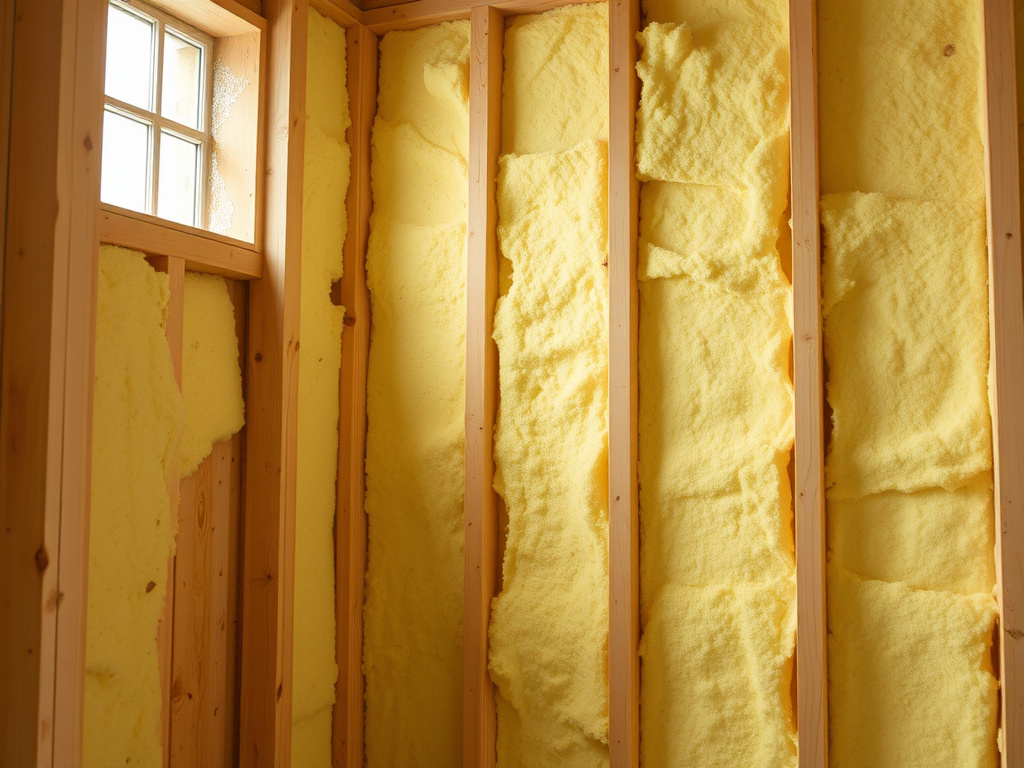
Open-cell spray foam is a lighter, less dense material than closed-cell, expanding to fill a stud or rafter cavity completely and then curing into a soft, flexible structure. It typically delivers around R-3.5 to R-3.8 per inch — a solid thermal performance number, though lower per-inch than closed-cell — at a meaningfully lower material cost, which makes it the more budget-friendly choice for covering larger areas.
In Oklahoma City's warm-humid Zone 3A climate, open-cell's vapor permeability is actually a relevant advantage in the right application: it lets an assembly dry in both directions rather than trapping moisture on one side, which matters in a climate with real summer humidity and a real winter vapor drive in the other direction. That's why open-cell is a common, sensible choice for interior walls and vented attic-floor coverage, where the assembly needs to breathe.
Why homeowners choose it
- Lower material cost per board foot than closed-cell, making larger-area jobs more budget-friendly
- Expands to fill irregular cavities and gaps completely, including around wiring and plumbing penetrations
- Genuinely effective interior sound-dampening between rooms and floors, a common secondary reason homeowners choose it for interior walls
- Vapor-permeable, letting the wall or attic assembly dry in both directions — relevant in a genuinely humid climate like OKC's
- Air-seals as it insulates, unlike fiberglass batts
How open-cell performs in Zone 3A's humidity
A common misconception is that a humid climate always calls for the least-permeable material available. In practice, vapor-permeable open-cell foam lets an assembly dry toward the interior in winter and toward the exterior in summer, which can actually reduce trapped-moisture risk in the right wall or attic assembly compared to a fully vapor-closed approach applied somewhere it isn't suited.
Where closed-cell earns its higher cost is in exposed, moisture-prone, or structural applications — roof decks, below-grade work, or garages. For standard interior wall cavities and vented attics, open-cell is a well-suited, cost-effective material for OKC's climate.
Ideal for
- Interior wall cavities where sound-dampening between rooms matters
- Vented attic-floor application where the space needs to breathe
- Budget-conscious projects covering a large area
- Homeowners prioritizing noise reduction alongside thermal performance
What affects the cost
Open-Cell Spray Foam questions, answered
For interior walls and vented attic-floor application, yes — its vapor permeability lets the assembly dry in both directions, which is a genuine advantage in a warm-humid Zone 3A climate with real summer humidity and winter vapor drive. It's not the right call everywhere, though; exposed or moisture-prone applications like roof decks generally call for closed-cell instead.
Open-cell is typically the more budget-friendly material, commonly on the lower end of the industry's per-board-foot range, versus closed-cell's roughly double cost per board foot. The tradeoff is a lower R-value per inch and lower structural rigidity — the right call depends on the application, not just the price.
Yes, meaningfully. Open-cell's soft, flexible cell structure absorbs sound energy more effectively than a rigid material or an unsealed fiberglass batt cavity, which is why it's a popular choice for interior walls around home offices, media rooms, and bedrooms even when thermal performance isn't the primary driver.
Open-Cell Spray Foam done right, by a local OKC crew
Open-Cell Spray Foam isn't a commodity — the result depends entirely on how carefully it's planned and installed for your specific home and Oklahoma City's real mixed climate. We assess what your house actually needs, prep and air-seal properly, and install to your Zone-3A-appropriate R-value target, so the work delivers the comfort and savings it's supposed to.
We serve Oklahoma City, Edmond, Norman, Moore, Yukon, Midwest City, Mustang, and Bethany. Every job starts with a free, no-pressure quote.
Just as important, we treat your home like the system it is. Insulation, air sealing, and ductwork all interact, and getting one right while ignoring the others leaves comfort and savings on the table. When we scope your open-cell spray foam, we look at how it fits the whole picture — so the finished result performs the way it should, holds up through a genuine OKC year, and actually lowers the bills you feel every month.
Free assessment
We evaluate your home and give you a clear, itemized quote.
Expert install
We prep, air seal, and install your open-cell spray foam to spec — clean and on schedule.
Savings you can feel
A more comfortable home year-round, lower utility bills, and honest advice about what your home needs.
Related services
Ready for a free open-cell spray foam quote?
Tell us about your home and we'll put together a clear, no-pressure spray foam insulation quote — built for Oklahoma City's real mixed-climate seasons.