Attic & Roof-Deck Spray Foam Insulation
The attic and roof deck carry both sides of OKC's climate load — summer heat gain and winter heat loss — and it's usually the most under-insulated part of the house. Roof-deck application also adds real structural adhesion between deck and framing.
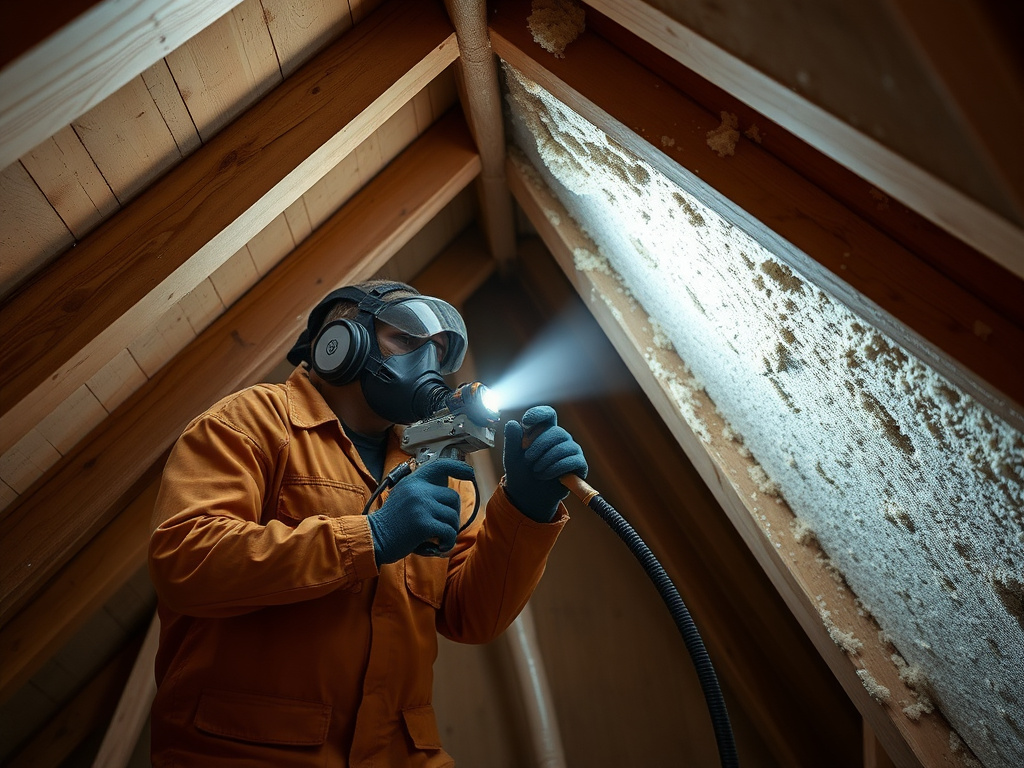
Oklahoma City sits in IECC Climate Zone 3A, a warm-humid, genuinely mixed climate — unlike a pure desert or pure cold-climate market, OKC homes fight real summer cooling loads and real winter heating loads in the same year. The attic and roof deck sit at the center of both problems: they take direct summer sun and lose conditioned heat fastest in winter, and in a home with thin, settled, or unevenly distributed attic insulation, that swing shows up directly in the utility bill every month of the year.
Spray foam insulation addresses this two ways at once: it insulates against heat transfer in both directions and it air-seals the attic in the same application, closing the gaps around wiring penetrations, top plates, and duct boots that fiberglass batts simply lie across without sealing. We install both roof-deck application (spraying closed-cell foam to the underside of the roof deck to bring the attic itself inside the home's conditioned envelope) and traditional attic-floor application, and we'll walk you through which approach fits your home's framing and duct layout during your free on-site assessment.
Closed-cell roof-deck application carries a second, purely structural benefit worth understanding on its own terms: it bonds the roof sheathing directly to the rafters or trusses across its full surface, not just at the nail lines. Building-science testing (published research from groups like the Insurance Institute for Business & Home Safety and academic wind-engineering studies) has measured meaningfully higher uplift resistance on foam-bonded roof decks compared to sheathing held by fasteners alone — a real structural-performance consideration in a region that sees real straight-line wind and severe spring storm seasonality. We frame this strictly as roof-assembly engineering, not as anything related to insurance coverage or claims.
Why homeowners choose it
- Addresses OKC's full climate swing — summer heat gain and winter heat loss — instead of a single-season fix.
- Air-seals and insulates in one application, closing the gaps around duct boots, top plates, and wiring penetrations that batts leave open.
- Roof-deck application brings attic-housed ductwork inside the conditioned envelope, cutting the conductive gain and loss ducts pick up sitting in an unconditioned attic.
- Closed-cell roof-deck foam adds a measurable structural bond between sheathing and framing — a genuine roof-assembly strength benefit in a region with real high-wind seasonality.
- Doesn't settle, sag, or compress the way blown-in or batt insulation can after years of temperature swings.
- Reduces HVAC cycling and runtime on both the cooling and heating side of the year.
Attic-floor vs. roof-deck application
Attic-floor application insulates along the floor of the attic, the same plane a fiberglass batt or blown-in job would cover — it's typically the more economical option and keeps the attic itself vented and unconditioned, which fits homes where ductwork is minimal or already well-sealed.
Roof-deck application instead sprays foam to the underside of the roof sheathing, effectively moving the attic inside your home's conditioned envelope. This is the stronger option when ductwork runs through the attic (very common in OKC-metro construction), since it stops that ductwork from sitting in a space that can swing from well over 130°F in summer to below freezing on a winter night.
- Attic-floor: lower cost, vented attic stays unconditioned
- Roof-deck: higher cost, brings attic and ductwork inside the envelope
- Roof-deck (closed-cell): adds structural sheathing-to-framing adhesion
Built for Zone 3A's real heating-and-cooling swing
OKC isn't a one-season climate. The Department of Energy's general guidance for warm-humid Zone 3A attics points toward R38 to R60 depending on your starting point and application method, a meaningfully higher target than a hot-dry desert market because winter heat retention genuinely matters here too. A lot of older OKC-metro homes are running well under that number.
We size your project to that full-year picture — not a summer-only fix that leaves you with a cold upstairs in January.
Ideal for
- Homes with visibly thin, compressed, or unevenly distributed attic insulation
- Homes with ductwork running through an unconditioned attic
- Homeowners who notice a hot upstairs in summer and a cold one in winter
- Homes built before modern IECC energy code adoption
- Homeowners specifically interested in roof-deck structural performance, not just thermal comfort
What affects the cost
Attic & Roof-Deck Insulation questions, answered
It depends on your ductwork. If your ducts run through the attic — common in OKC-metro homes — roof-deck application usually makes more sense, since it brings the ductwork inside the conditioned envelope instead of leaving it exposed to attic temperature extremes. If ductwork is minimal or well-sealed elsewhere, attic-floor application is often the more cost-effective choice. We'll walk your attic and give you a straight recommendation.
Closed-cell spray foam applied to the underside of roof sheathing bonds the sheathing to the rafters or trusses across its full surface area, not just at the fastener lines. Published wind-engineering and building-science testing has measured meaningfully higher uplift resistance on foam-bonded decks versus fastener-only sheathing. This is a structural roof-assembly characteristic, not an insurance product or coverage claim — we don't sell or discuss insurance, and we'd encourage you to talk to your insurer separately about anything related to premiums or policy terms.
OKC sits in IECC Climate Zone 3A. DOE's general guidance for warm-humid Zone 3A attics points to roughly R38 to R60 depending on your starting point and which application method you choose. The exact code-minimum depends on which IECC edition your specific jurisdiction has adopted — we'll confirm what applies during your assessment rather than assume a single number.
Yes — that's a real part of the pitch here specifically because OKC has a genuine heating season, unlike a pure desert climate. Properly air-sealed, correctly R-valued attic insulation reduces heat loss in winter the same way it reduces heat gain in summer; it's the same envelope doing both jobs.
Attic & Roof-Deck Insulation done right, by a local OKC crew
Attic & Roof-Deck Insulation isn't a commodity — the result depends entirely on how carefully it's planned and installed for your specific home and Oklahoma City's real mixed climate. We assess what your house actually needs, prep and air-seal properly, and install to your Zone-3A-appropriate R-value target, so the work delivers the comfort and savings it's supposed to.
We serve Oklahoma City, Edmond, Norman, Moore, Yukon, Midwest City, Mustang, and Bethany. Every job starts with a free, no-pressure quote.
Just as important, we treat your home like the system it is. Insulation, air sealing, and ductwork all interact, and getting one right while ignoring the others leaves comfort and savings on the table. When we scope your attic & roof-deck insulation, we look at how it fits the whole picture — so the finished result performs the way it should, holds up through a genuine OKC year, and actually lowers the bills you feel every month.
Free assessment
We evaluate your home and give you a clear, itemized quote.
Expert install
We prep, air seal, and install your attic & roof-deck insulation to spec — clean and on schedule.
Savings you can feel
A more comfortable home year-round, lower utility bills, and honest advice about what your home needs.
Related services
Ready for a free attic & roof-deck insulation quote?
Tell us about your home and we'll put together a clear, no-pressure spray foam insulation quote — built for Oklahoma City's real mixed-climate seasons.